

Unlocking Engine Power: Understanding Turbocharger Function
Understanding Turbochargers: How They Boost Engine Power and Improve Performance

Turbochargers reclaim exhaust energy to spin a turbine that drives a compressor, forcing more air into the engine so it can burn more fuel and produce higher horsepower and torque. This guide lays out the physics of turbo operation, the key parts you’ll deal with, and the differences between turbo styles so you can balance drivability and peak power. If you’re thinking about an upgrade, knowing how boost, spool behavior, and system requirements interact is the difference between predictable gains and expensive mistakes. We’ll walk the turbo cycle step-by-step, list the supporting components—intercoolers, charge piping, fueling—and cover the maintenance practices that keep a turbo working reliably. You’ll also find quick charts, diagnostic tables, and practical checklists to simplify part selection and tuning. By the end, you’ll understand how turbos raise engine output, how to reduce lag, and which supporting components matter most for a successful kit or upgrade.
How Does a Turbocharger Boost Engine Power?
A turbocharger turns otherwise wasted exhaust energy into compressed intake air, increasing the oxygen mass in each combustion stroke so the engine can burn more fuel and make more power. A turbine wheel sits in the exhaust stream and connects by a shaft to a compressor wheel on the intake side; exhaust flow spins the turbine, which drives the compressor and raises manifold pressure (boost). That higher pressure improves volumetric efficiency and delivers more torque and horsepower across the rev range depending on boost level and tuning. Because higher cylinder pressures raise the risk of detonation, any upgrade must be supported by correct fueling, ignition timing, and charge cooling. Intercoolers, upgraded fuel delivery, and calibrated engine management are essential before you raise boost above factory settings.
Breaking the process into clear steps makes it easier to visualize the energy flow, troubleshoot issues, and plan a tune that matches your engine and goals.
- Exhaust gas leaves the cylinder and enters the turbine housing, transferring energy to the turbine wheel.
- The turbine spins the shaft and compressor wheel, drawing in and compressing ambient intake air.
- Compressed air passes through the intercooler to shed heat, then enters the intake manifold at higher pressure.
- The engine ingests more air and fuel per stroke, producing greater torque and horsepower; a wastegate limits peak boost to protect the engine.
Those steps show why turbo sizing, fueling capacity, and thermal control determine safe, repeatable power gains.
What Is Forced Induction and How Does It Enhance Engine Performance?
Forced induction raises the density of the air charge entering the cylinders so each combustion event contains more oxygen and more fuel can be burned, producing higher power. Naturally aspirated engines are constrained by ambient pressure; a turbo increases manifold pressure above ambient to boost volumetric efficiency. Properly managed forced induction also lets manufacturers downsize engines without losing performance, improving packaging and fuel economy. That said, forced induction works only when systems are matched—correct injectors, tuned ECU maps, and sufficient cooling are needed to keep combustion safe under higher cylinder pressures.
Think of a turbo as a high-speed, exhaust-driven air pump: once you accept that image, it’s straightforward to see how compressed air becomes usable horsepower when fuel and ignition are handled properly.
How Does Compressed Air Increase Horsepower and Torque?
Compressed air increases the oxygen available for combustion, allowing the engine control system to add more fuel and generate higher cylinder pressures and thermal conversion. Power generally scales with intake air mass—roughly speaking, a 20% rise in mass flow at a given RPM can deliver a similar percent increase in power, assuming fueling and detonation limits are respected. Compression also heats the intake charge, which reduces density unless an intercooler removes that heat, so charge cooling is vital to preserve gains and avoid knock. In practice, boost pressure, intercooler efficiency, and precise calibration together determine how much safe, repeatable power you’ll actually achieve.
Keeping these limits in mind is crucial when choosing a turbo kit or planning tuning—unchecked boost or inadequate fueling quickly erode reliability and performance.
What Are the Main Components of a Turbocharger and How Do They Function?
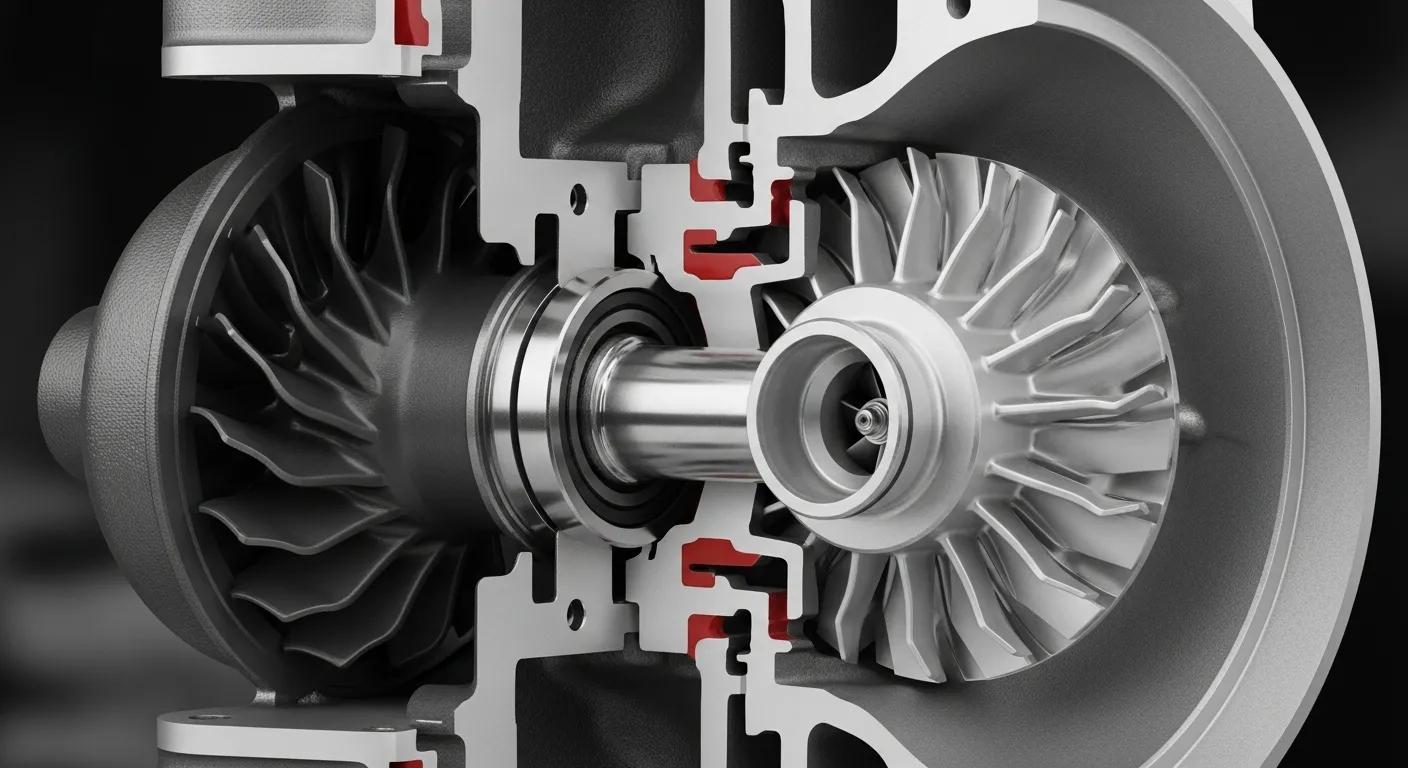
A turbocharger is made up of a turbine housing and wheel, a compressor housing and wheel, a center housing rotating assembly (CHRA) with bearings and a shaft, plus control devices like wastegates and blow-off valves that regulate pressure and protect the system. The turbine extracts exhaust energy, the compressor pressurizes intake air, the CHRA supports rotation and oil flow, and valves manage pressures during transients. These parts operate at high temperatures and speeds, so material selection and lubrication are critical. Common failure modes include bearing wear, oil coking, and blade damage from foreign-object ingestion. Knowing each component’s role helps owners and techs prioritize inspections and preventive maintenance.
Understanding component function also makes it easier to read symptoms—shaft play points to CHRA wear, a sticking wastegate can cause overboost—and to follow the inspection and service steps that come later.
| Component | Function | Performance Impact / Failure Mode |
|---|---|---|
| Turbine wheel & housing | Converts exhaust energy into rotational force | Shapes spool behavior and high-RPM output; cracked housings or damaged blades reduce efficiency |
| Compressor wheel & housing | Draws in and compresses intake air | Determines max flow and boost capacity; damaged blades cause surge and loss of boost |
| CHRA (shaft + bearings) | Supports rotation and transmits torque between turbine and compressor | Bearing wear creates shaft play, oil leaks, and can lead to catastrophic failure if ignored |
How Do the Turbine and Compressor Work Together in a Turbocharger?
The turbine and compressor are mechanically linked: exhaust gas expands over the turbine blades, producing torque that’s passed through the shaft to the compressor wheel, which accelerates intake air to higher pressure. Turbine geometry and wheel inertia dictate spool behavior—larger turbine wheels extract more energy at high flow but spool more slowly, while smaller wheels spool quickly but can choke at high power. Matching a compressor map to the engine’s airflow needs shows where the turbo is efficient and where it risks surge or hitting compressor limits. Understanding this interaction helps you pick between quicker response and higher peak flow depending on street, track, or mixed-use goals.
Familiarity with wheel shapes and housing A/R effects makes it easier to interpret compressor and turbine maps and predict on-road performance. Aodhan wheels
What Role Does the Center Housing Rotating Assembly and Shaft Play?
The CHRA houses the shaft, bearings, and seals—the turbo’s rotating heart—and depends on clean, continuous oil flow for lubrication and cooling. Bearing type affects friction and spool response: ball bearings lower friction and improve spool, while journal bearings are durable and more tolerant of marginal oil conditions but may spool a bit slower. Oil quality and service intervals directly affect CHRA life because coked or contaminated oil can block passages and rapidly ruin bearings. Symptoms such as axial or radial shaft play, oil in the intake or exhaust, or unusual noises indicate CHRA issues that need inspection or a rebuild.
Knowing CHRA failure modes and bearing trade-offs helps you plan maintenance and choose parts that balance performance and longevity.
What Are the Different Types of Turbochargers and How Do They Compare?

Turbos come in several architectures—single-scroll, twin-scroll, variable geometry (VGT), and electric-assist—each trading cost, complexity, spool behavior, and drivability. Single-scroll units are straightforward and cost-effective but lose some pulse-separation benefits. Twin-scroll designs separate exhaust pulses to improve scavenging and low-end response. VGTs use movable vanes to tune turbine flow for strong low-RPM torque and efficient high-RPM performance. Electric-assist turbos add motor help to reduce lag and broaden response. The best choice depends on vehicle goals, exhaust pulse timing, and budget.
The comparison table below helps match turbo type to priorities when you evaluate aftermarket kits and upgrade paths.
| Turbo Type | Best For / Pros | Notes / Example Applications |
|---|---|---|
| Single-scroll | Simple, lower cost, reliable | Good for basic upgrades and high-flow setups where packaging is flexible |
| Twin-scroll | Better low-end torque and faster spool | Ideal for engines with paired exhaust pulses and street-focused performance builds |
| Variable Geometry (VGT) | Wide torque band, excellent drivability | Common on diesels and modern petrol engines prioritizing low-RPM response |
| Electric-assist | Near-instant spool, reduced lag | Emerging for hybrids and 48V systems; higher integration cost |
This side-by-side view clarifies the trade-offs between simplicity, low-end response, and peak flow so you can pair turbo architecture with your engine’s pulse order and intended use.
Many aftermarket suppliers offer twin-scroll or staged kits tailored to specific platforms. When evaluating full turbo kits or standalone turbos, choose manufacturers and packages that list vehicle compatibility and expected horsepower gains. Revline Performance stocks turbos and complete kits from entry-level stage options up to higher-output systems; kit pricing typically ranges from the mid-to-high hundreds into premium brackets depending on platform and components. Comparing kit specs against the type table above helps align spool behavior and peak flow with your drivetrain goals.
How Do Single-Scroll, Twin-Scroll, and Variable Geometry Turbochargers Differ?
Single-scroll turbos collect all exhaust pulses into one volute—simple and usually cheaper, but pulse mixing can reduce scavenging efficiency. Twin-scroll turbos split pulses into separate channels timed to the engine’s firing order, preserving pulse energy and improving low-end torque and transient response without sacrificing top-end flow. Variable geometry turbos adjust the turbine’s effective A/R with movable vanes to deliver strong low-RPM response and efficient high-RPM operation, at the cost of added complexity. In short: single-scroll for budget or high-rpm builds, twin-scroll for street-focused torque and response, and VGT where broad drivability and efficiency matter most.
Understanding pulse timing and housing design explains why twin-scroll gains are especially noticeable on engines with uneven exhaust spacing or when low-end drivability is a priority.
Advanced Variable Geometry Turbocharger for Diesel Engine Applications
Diesel engines face stricter emissions targets, creating trade-offs between fuel economy, NOx, and particulates. Advanced variable nozzle turbocharger designs (AVNT™) address those trade-offs by simplifying the variable geometry mechanism and integrating electro-hydraulic actuation with the bearing system. The paper shows how this approach improves diesel performance, fuel economy, torque, emissions, and braking capability, with measurable gains from the AVNT design.
Advanced variable geometry turbocharger for diesel engine applications, 2002
What Are Electric Turbochargers and Their Advantages?
Electric turbos use an electric motor to spin the compressor or assist spool-up, cutting traditional turbo lag by delivering boost before exhaust energy builds. They pair well with downsized engines and hybrid systems where available electrical power can widen the torque curve without major exhaust-side redesign. Benefits include faster response, stronger transient torque, and lower exhaust backpressure potential. Downsides today are higher cost and integration complexity for retrofits. As powertrains electrify, electric-assist and 48V-compatible turbos are becoming viable OEM and aftermarket options to reduce lag while keeping peak power.
These systems perform best when engine management coordinates electric assist with fuel and ignition control to keep combustion safe and responsive.
What Is Turbo Lag and How Can It Be Minimized for Better Efficiency?
Turbo lag is the delay between pressing the throttle and feeling effective boost. It comes from the time needed to accelerate the turbine and compressor when exhaust energy is low. Factors that affect lag include turbine inertia, manifold design, housing A/R ratio, and control strategies like wastegate and valve mapping. Reducing lag improves throttle response and drivability; common approaches include lighter rotating components, twin-scroll or pulse-separated manifolds, VGTs, electric assist, and careful wastegate and boost-control tuning. Start with software and modest hardware changes before moving to costlier swaps—this lets you capture the most practical gains first.
That leads naturally into the control elements—wastegates and blow-off valves—that shape boost behavior and protect the compressor during transients.
- Smaller inertial rotating mass: Lighter compressor and turbine wheels spin up faster.
- Twin-scroll or pulse-separated manifolds: Preserve exhaust pulse energy for quicker spool.
- Active control strategies: Wastegate sequencing, anti-lag, and boost-by-gear tuning sharpen response.
These measures range from low-cost and practical to advanced upgrades, giving a clear path to better responsiveness for most builds.
How Do Wastegates and Blow-off Valves Control Boost and Reduce Lag?
Wastegates bypass exhaust around the turbine to control turbine speed and limit boost. Internal wastegates are compact and simple; external wastegates provide finer control for high-output systems. Correct wastegate sizing and calibration prevent overboost and stabilize spool behavior. Blow-off valves (BOVs) vent compressed air on throttle lift to avoid compressor surge and protect the compressor wheel, preserving spool health and reducing stress. Wastegate and BOV settings should be coordinated in ECU tuning to balance response, stability, and safety.
Understanding how these valves interact helps tuners avoid drivability issues tied to lag and prevents damage from surge or uncontrolled boost spikes.
What Are Practical Ways to Improve Turbocharger Response Time?
Start with software: ECU calibration that refines fueling, ignition timing, and wastegate control can noticeably reduce the perceived lag without swapping hardware. Hardware options include choosing a turbo with lower rotating mass or twin-scroll architecture, fitting a less restrictive downpipe to reduce backpressure, and using a high-flow intercooler and well-routed charge piping to limit pressure loss and heat soak. For staged upgrades, consider ball-bearing CHRAs for lower friction or electric-assist turbos for near-instant spool where budget and integration allow. Prioritizing fueling and cooling alongside turbo selection gives the best balance of response and longevity for street and performance builds.
These prioritized tactics help owners spend wisely while improving drivability and protecting engine reliability.
What Supporting Components Are Essential in a Turbo System?
A complete turbo system needs the right supporting parts—intercooler, charge pipes and clamps, exhaust manifold and downpipe, wastegate and BOV plumbing, plus matched fuel and engine management—to turn turbo potential into safe, repeatable power. The intercooler removes heat from the compressed charge to restore density and reduce knock risk; charge piping transports pressurized air with minimal pressure drop; exhaust manifolds and downpipes manage turbine energy and backpressure. Each component’s specs affect PSI, intake temperatures, and durability, so match parts to expected boost levels and power outputs for a reliable system.
The table below maps supporting components to typical specs and effects so you can prioritize upgrades when selecting parts or a full kit.
| Supporting Component | Typical Spec / PSI or Temp | Effect on System / Product Example |
|---|---|---|
| Intercooler | Temperature drop target 20–40°C at steady state | Reduces intake temps to lower knock risk; bar-and-plate cores resist heat soak under sustained loads |
| Charge piping | Diameter matched to flow (e.g., 2–3+ inches) | Minimizes pressure drop and prevents boost leaks; quality clamps and couplers reduce failure points |
| Exhaust manifold / downpipe | Flow capacity and backpressure control | Efficient flow improves spool and peak power; equal-length or twin-scroll manifolds aid scavenging |
Choosing correctly sized, rated supporting parts prevents common failures and unlocks the usable power your turbo can deliver—especially important when fitting kit-based systems.
After you identify required supporting components, consider availability and packaged solutions. Revline Performance carries turbochargers, complete turbo kits, and supporting components to help owners build matched systems; kits range from entry-level stage packages to higher-output systems across many platforms. For many builds, choosing a kit that includes the right intercooler and charge piping simplifies installation and tuning. We focus on verified brands, clear compatibility, and fast shipping for in-stock items.
How Do Intercoolers and Charge Pipes Improve Turbo Efficiency?
Intercoolers cool the compressed charge after the turbo, restoring density and reducing detonation risk so you can safely realize horsepower gains. Core design—bar-and-plate versus tube-and-fin—affects heat transfer, pressure drop, and packaging; bar-and-plate generally resists heat soak better under sustained loads. Charge pipe diameter and routing impact pressure loss and transient response: larger pipes reduce restriction at high flow but can blunt quick spool if oversized. Material and clamp quality matter too—silicone joins or mandrel-bent aluminum with robust clamps lower leak risk and improve reliability.
These thermal and flow trade-offs explain why intercooler selection and pipe routing are often as important as the turbo itself when chasing reliable power.
What Is the Role of the Exhaust Manifold in Turbocharger Operation?
The exhaust manifold channels high-energy exhaust pulses to the turbine; its shape and timing determine how effectively pulse energy is used for spool and efficiency. Equal-length tubular headers preserve pulse timing and improve scavenging for better low-end spool, while cast manifolds are compact and durable but may sacrifice some scavenging. Twin-scroll manifolds separate pulses to feed twin-scroll turbos more effectively, improving low-end torque and transient response without changing turbine size. Materials and thermal management—coatings, ceramic wraps, or heat shields—help retain exhaust energy for better spool and protect nearby components from heat.
Understanding manifold design helps you pair the right manifold and turbo architecture to meet your spool and peak-power objectives.
How Should Turbochargers Be Maintained for Longevity and Optimal Performance?
Turbo longevity depends on good lubrication, controlled thermal cycles, and routine inspections; simple habits and scheduled checks prevent most failures. Clean oil of the correct spec and on-time oil changes maintain the bearing film and remove contaminants that cause coking. Warm-up and cool-down routines limit thermal shock and oil coking in the CHRA. Regular visual and mechanical checks—looking for shaft play, oil or boost leaks, and wheel damage—catch problems before they become catastrophic. A consistent maintenance program combined with quality parts and proper tuning preserves performance and minimizes repair costs.
These maintenance best practices form a practical checklist and service cadence shops and owners can follow to protect turbo investments.
| Inspection Item | What to Look For | Recommended Action |
|---|---|---|
| Oil condition | Dark, burnt smell or sludge near turbo inlet | Change oil and filter; inspect oil feed and return lines for blockages |
| Shaft play | Excessive axial or radial movement | Remove turbo for CHRA inspection; rebuild or replace if out of spec |
| Boost/pressure test | Drop in expected PSI or fluctuating boost | Check intercooler, piping, clamps, and wastegate operation |
Why Are Regular Oil Changes Critical for Turbo Health?
Oil lubricates and cools CHRA bearings and the shaft; degraded oil raises friction, accelerates bearing wear, and can coke, blocking oil passages and destroying a turbo. High-temperature operation accelerates oil breakdown, so follow manufacturer oil specs and service intervals—synthetic oils with strong thermal stability are commonly recommended for turbocharged engines. Signs of oil-related trouble include oil in the intake or exhaust, rising shaft play, or unusual turbo noise—any of which require immediate inspection. Regular oil maintenance extends CHRA life, preserves boost reliability, and reduces the chance of costly rebuilds.
Because oil is so important, add oil-change reminders to your routine service schedule to protect both the turbo and the engine.
What Inspections and Checks Help Prevent Turbocharger Failures?
Quick inspections include checking oil feed and return lines for leaks, pressure-testing for boost leaks at clamps and couplers, measuring shaft play to spot bearing wear, and listening for unusual noise or boost loss during road tests. Boost-leak testing and smoke tools reveal hidden leaks in intercooler piping, and visual checks of turbine and compressor wheels catch ingestion damage early. If problems persist—continuous oil consumption, low boost, or loud bearing noise—get a professional diagnosis and consider CHRA rebuild or replacement to avoid engine damage.
Shops and owners who follow this routine reduce the risk of sudden failures and keep turbo upgrades delivering the expected performance.
If you’re shopping for parts or a complete kit, Revline Performance carries turbo kits and supporting components for many makes and models, and we offer enthusiast-focused support to match kit selection to expected horsepower gains and fitment. For vehicle-specific compatibility checks or help planning an installation and tune, contact Revline Performance for guidance and current kit options.
Frequently Asked Questions
What is the difference between a turbocharger and a supercharger?
Both force more air into the engine, but they use different energy sources. A turbocharger uses exhaust gases to spin a turbine that drives a compressor; a supercharger is mechanically driven off the crank. Turbos can be more efficient because they recover waste energy, while superchargers deliver immediate boost at the cost of drawing power from the engine. The right choice depends on desired response and efficiency targets.
How does turbocharger size affect performance?
Turbo size influences spool characteristics and maximum flow. A larger turbo supports higher power at high RPM but usually spools slower, increasing lag. A smaller turbo spools quickly and improves low-end response but limits peak power. Choose size based on intended use—daily driving, track duty, or a compromise between the two—and match it to engine displacement and airflow needs.
What maintenance practices are essential for turbocharged engines?
Key practices are timely oil changes with the correct synthetic oil, letting the engine warm up before hard driving, and allowing cool-down periods after heavy use. Regular inspections for oil leaks, shaft play, and consistent boost help catch issues early. Following these steps keeps the turbo and engine reliable.
Can I install a turbocharger on a naturally aspirated engine?
Yes, but it requires planning and supporting mods. You’ll likely need larger injectors, a higher-capacity fuel pump, proper engine management, and sometimes strengthened internals to handle increased pressures and temperatures. Professional tuning is essential to ensure safe, reliable operation after the conversion.
What are the signs of a failing turbocharger?
Common signs include excessive smoke from the exhaust, whining or grinding noises, a drop in boost pressure, and higher oil consumption. Noticeable loss of power or a check-engine light can also indicate turbo issues. Regular inspections and preventive maintenance make it easier to catch problems early.
How do I choose the right turbocharger for my vehicle?
Consider your engine’s displacement, intended use (street, track, towing), and target power. Match the turbo’s flow characteristics to your engine’s airflow needs, and pick an architecture—single-scroll, twin-scroll, VGT—that fits your goals. When in doubt, consult experienced suppliers or tuners to select a turbo and kit that balance performance and reliability.
Conclusion
Understanding turbochargers is essential for maximizing engine performance and efficiency, as they convert wasted exhaust energy into increased horsepower and torque. By selecting the right turbo system and supporting components, you can achieve significant power gains while maintaining reliability. For those ready to enhance their vehicle's performance, explore our range of turbo kits and components tailored to your needs. Start your journey towards a more powerful ride today!


